
Background: At 19:25 just after the ED huddle my partner and I get a consult call from the emergency department regarding a 56 YO female who came in for SOB 15L 02 via NRM by ambulance. She has audible expiratory wheezing and has coarse crackles upon auscultation. She is a frequent to the emergency department and is scheduled appointment to see her cardiologist for a follow up echo in three days. PHX of pulmonary HTN, mitral and tricuspid insufficiency, peripheral vascular disease, hypertension, dyslipidemia, and a history of extensive smoking. She was quickly placed on the edward’s Flotrac for hemodynamics monitoring. SV 43; SVR 1430, HR 123. Dr. Haycock brings the ultrasound to bedside and after his many POCUS points, He calls for an inhaled Milrinone to be administered to this critically ill patient. What is this medication for?
Remember these three things: VA coupling, inotropy, Lusitropy.
Milrinone is a medication indicated for cardiac support in patients with acute heart failure, pulmonary hypertension, or chronic heart failure. It improves cardiac contractility, cardiac relaxation and induces vasodilation. It has the overall effect of increased cardiac output, improved left ventricle-arterial coupling, and enhanced cardiac mechanical efficiency.
VA coupling characterizes the interaction between the myocardial contractile function and the load opposed by the arterial circulation. This interaction defines the cardiovascular performance and efficiency and can be analytically defined by relating ventricular and arterial elastances.
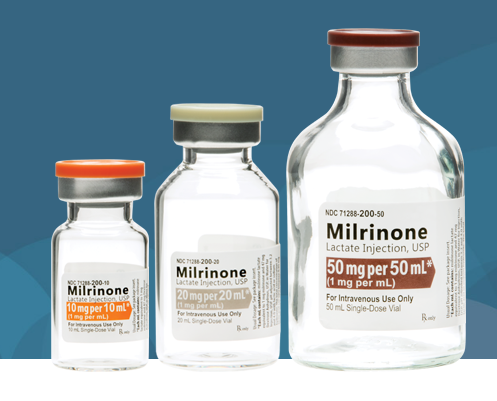
Image: https://www.meithealpharma.com/product/28 | Milrinone is a PDE III inhibitor. Selective effects in the myocardium and in the vasculature.
In the Myocardium, PDE III inhibition leads to inotropy, Lusitropy (improved relaxation). In turn leads to improved systolic and diastolic function optimizing cardiac output. It also causes Ca+ reuptake resulting in enhanced lusitropy.
In the Vasculature it results in vasodilation in both arteries and veins. Its vasodilatory effect are more potent than beta-2 agonists, including dobutamine and isoproterenol. It is available in an inhalation formula for direct effect on the pulmonary vasculature.
Dosing | as compared with dobutamine | decreases PVR in patients with pulmonary hypertension secondary to severe heart failure |
Names, dates, and personal identifying details have been changed throughout this website to comply with the Health Insurance Portability and Accountability Act (HIPAA). **
 Code Team Pearls
Leave a comment