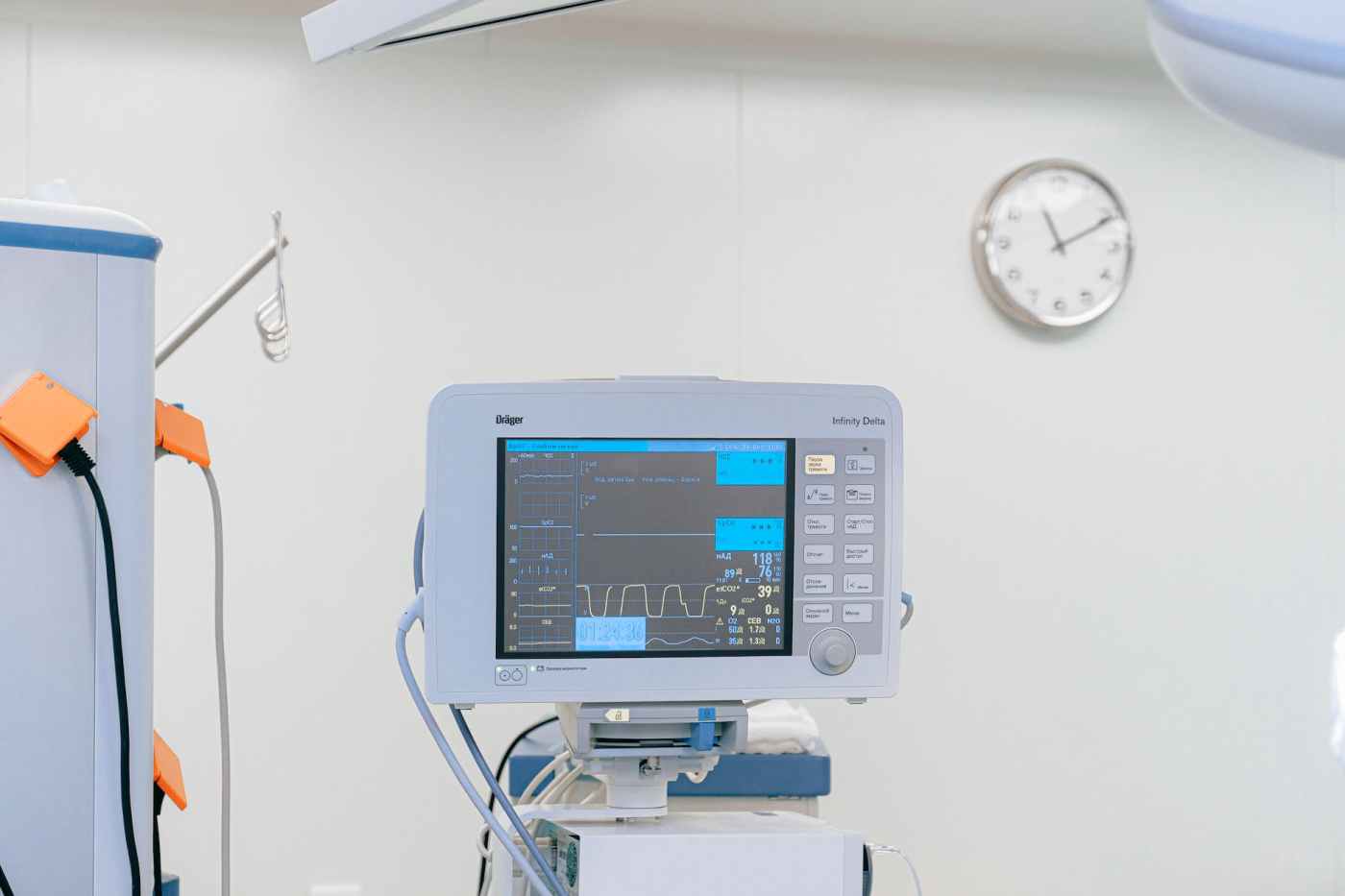
Hello everyone. I was rounding during shift last night and came across a patient with a Pulmonary artery catheter and I though a quick review would be helpful since we seldom use it now. Click here for a more in depth review of the Swan Ganz.
Insertion site:
Central vein, such as the femoral, jugular, antecubital or brachial vein. Can be done under fluoroscopy or ultrasound and echocardiography.
Flow and ECG waveform:
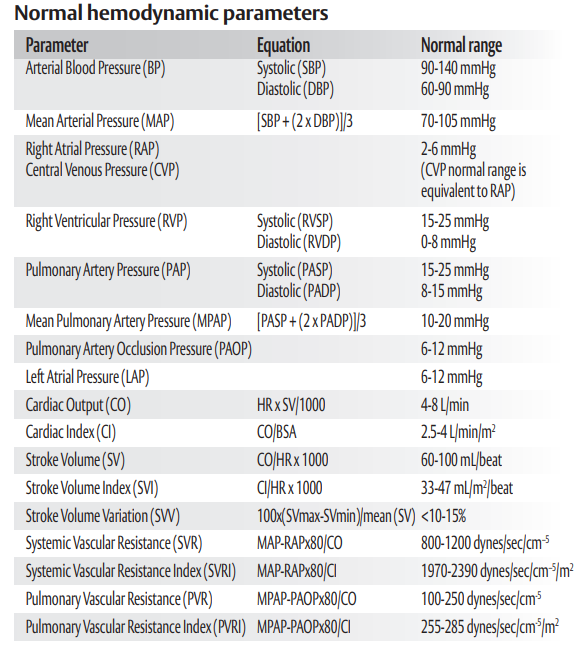
Central vein > SVC, IVC, > RA > tricuspid > RV > RVOT > pulmonary valve > PA (25/10 mmHg) balloon for PCWP or PAOP (4-12 mmHg, determine the cause of pulmonary hypertension, gives indirect assessment of left filling pressure), Sv02 draw ( >70%, determine cause of shock, cardiogenic, septic or distributive) > CO (4-8 L/min),
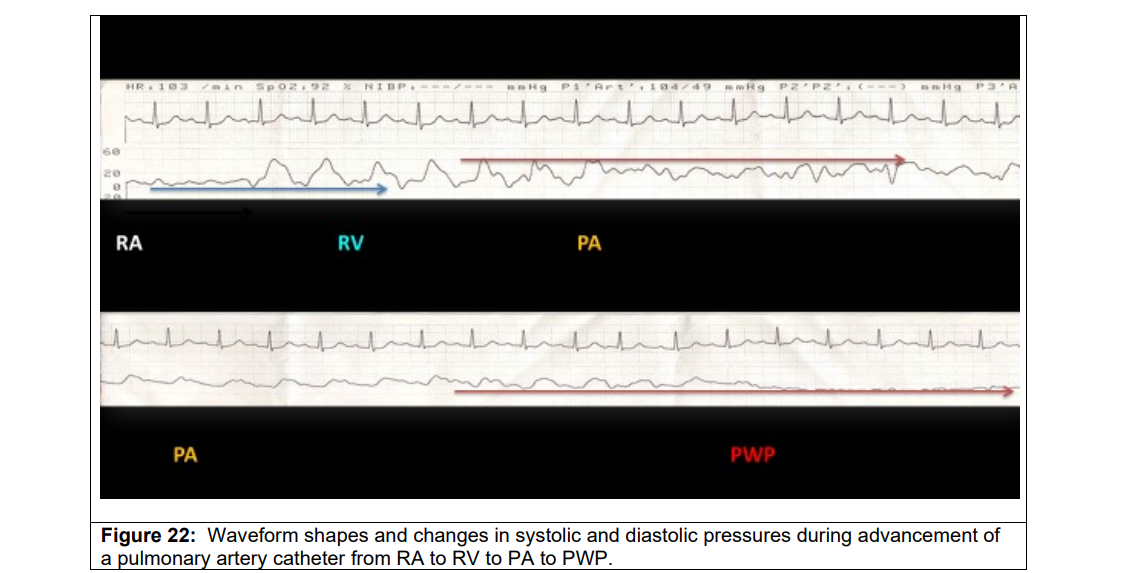
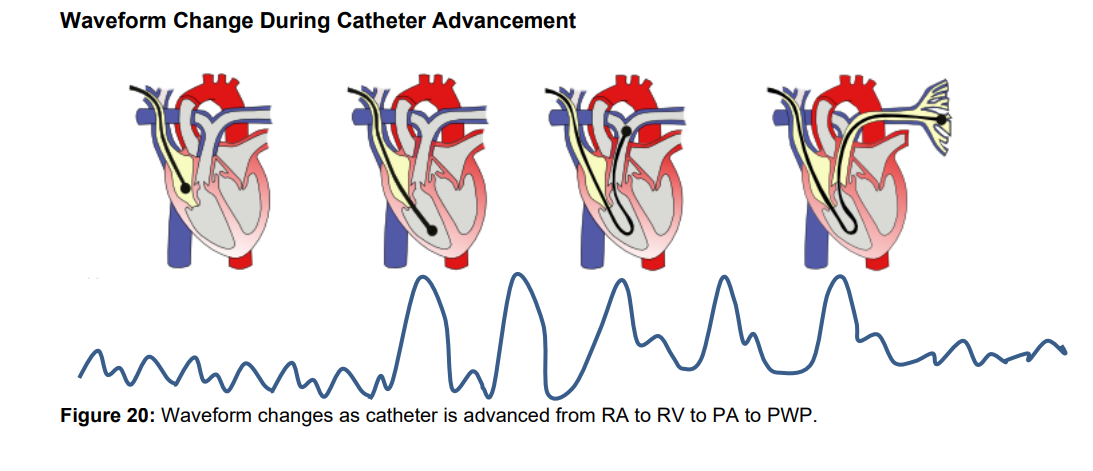
Hemodynamic parameters:

Indication:
- Evaluation for Pulmonary Hypertension
- mixed venous oxygen saturation (SvO2) measurement such as in septic or cardiogenic shock
- volume status in severe shock
- cardiac tamponade or constrictive pericarditis
- right-sided valvular disease, congenital heart disease, cardiac shunts for surgical repair
Contraindication:
- Active infection to insertion site
- Right sided ventricular assist device
- Lack of consent
PAC diagram:
Quadruple-lumen, thermodilution sensor attached to a pressure transducer, 60 to 110 cm length, 4F to 8F in caliber,
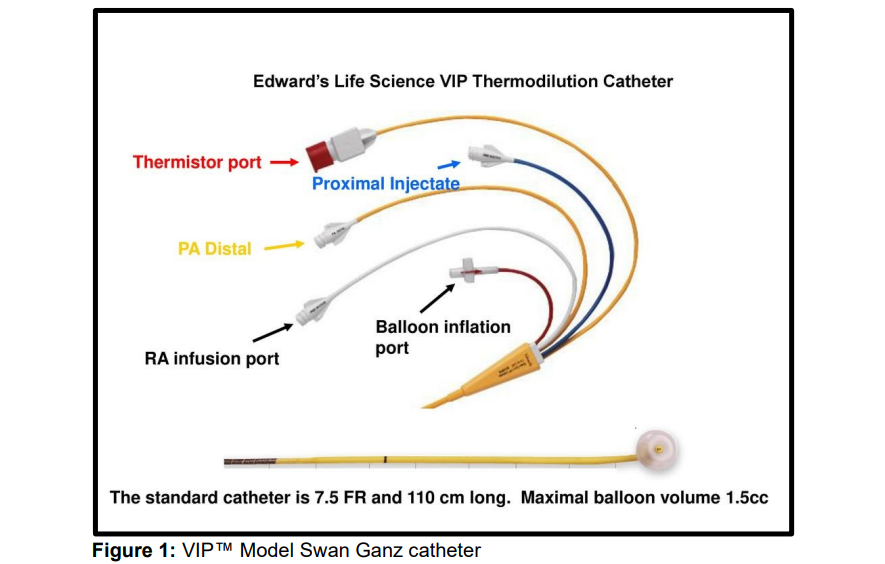
- Blue, CVP, 30 cm from the tip, RA, RAP, for infusion
- White, 31 cm, RA, infusion
- Yellow, PA distal, PAP, mixed venous gas can be drawn from here
- Red/white, Thermistor, temperature-sensitive wire, 4 cm proximal to the tip of the catheter, The terminal portion- thermistor bead rests in a main pulmonary artery
- Red, Balloon port,
- Black lines, within catheter, one thin line- 10cm, thick line 50 cm
Complications:
- Infection
- Pneumo or hemothorax (subclavian approach)
- Air emboli
- Atrial, ventricular arrhythmias
- Valve rupture or wall perforation
- Misplacement
- Vessel rupture (balloon inflation), pseudoaneurysm formation,
- Pulmonary infarction
- Thromboembolism secondary to inflammation or infection
Names, dates, and personal identifying details have been changed throughout this website to comply with the Health Insurance Portability and Accountability Act (HIPAA). ** | This website runs on coffee. Thank you for supporting this journey!
 Code Team Pearls
Leave a comment