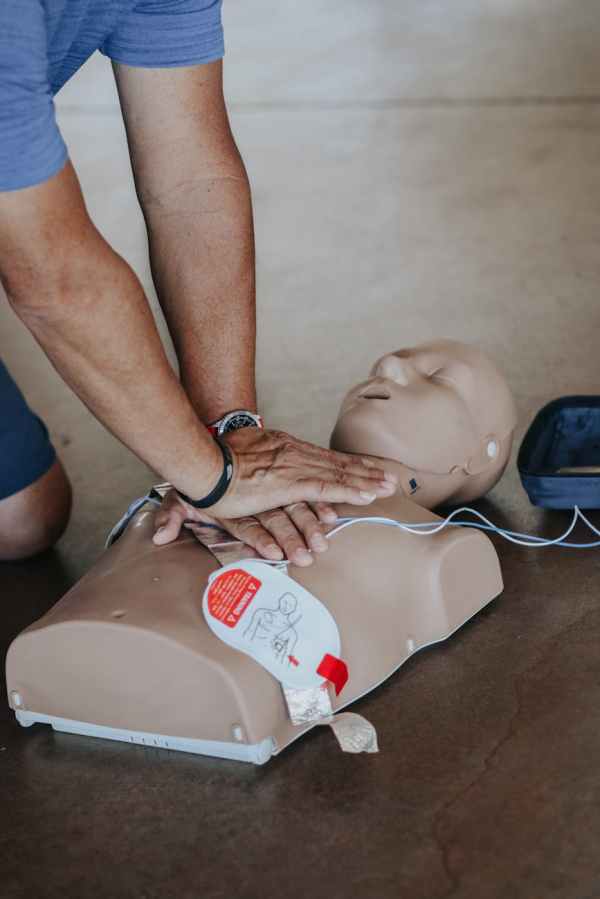
Sudden cardiac arrest is a leading cause of death in industrialized nations, with over 700,000 annual fatalities in Europe and the USA, largely due to ventricular fibrillation (VF) or pulseless ventricular tachycardia. Despite repeated defibrillation attempts, many patients remain in shock refractory VF, and further attempts without method changes are often ineffective, leading to decreased... Continue Reading →
5 minutes EVD review and setup
Courtesy of Critical RN skills | https://youtu.be/RWEVGgBZ9Sg?si=Efzd-NJOKOxSgOel | 2 person prime the system. All tubing system must remain sterile when connecting and flushing. image: Sterile flush, transducer, stopcock, and the EVD with drainage system. Connect primary stopcock to the system. Connect transducer to main system stopcock. MD will flush the system with sterile normal saline... Continue Reading →
TEE and the mitral valve during CPR
Ever wonder why Dr. Haycock asks for the TEE kit when we have a full arrest coming into the emergency department? Let's look into the simple yet valuable tool used during a code situation. Why TEE for cardiopulmonary resuscitationTEE facilitates continuous cardiac monitoring, aids in identifying reversible causes, optimizes chest compression techniques, can notably shorten... Continue Reading →
Acumen iQ, FloTrac system quick set up guide
Here's a quick step by step guide for our critical care nurses using the Edward's minimally invasive set up with the Flotrac system for hemodynamic monitoring and fluid responsive test. 1 press the power button 2. enter and confirm patient demographics 3. select monitoring technology 4. open acumen iq sensor setup 5. replace all caps... Continue Reading →
LVAD
You come on shift in the ED and you find yourself working the first time with a patient that has had a Ventricular assist device for a few years. What do you need to know and the key points to remember? Historycreated by Domingo Liotta at Baylor College of Medicine in Houston in 1962. The... Continue Reading →
Quick Flopatch overview
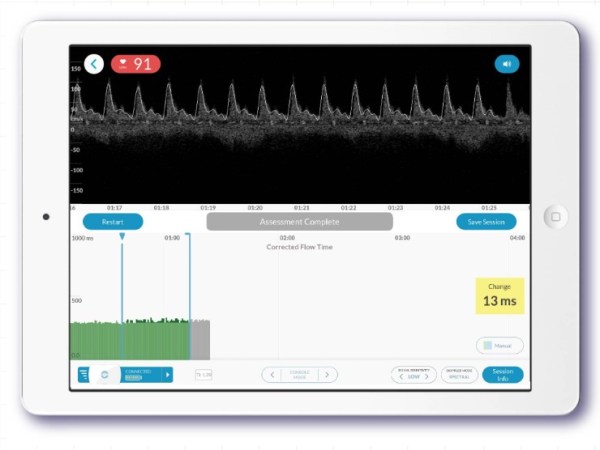
RIVERSIDE, Calif., September 21, 2023 /Business Wire/ — Riverside University Health System is proud to announce the implementation of FloPatch by Flosonics Medical. As a pioneer in adopting new, ground-breaking medical technology, Riverside is making a significant leap forward in healthcare innovation, particularly in the life-saving area of sepsis management. read more. Hi everyone. Here is... Continue Reading →
5 minutes Swan Ganz review
Hello everyone. I was rounding during shift last night and came across a patient with a Pulmonary artery catheter and I though a quick review would be helpful since we seldom use it now. Click here for a more in depth review of the Swan Ganz. Insertion site: Central vein, such as the femoral, jugular,... Continue Reading →
Diamond-Forrester Profile and the VExUS approach to fluid management
Here are quick diagram and review on the 4 quadrant approach to fluid responsiveness and fluid tolerance with the Diamond-Forrester Profile as we learned the basics with flosonic's flopatch and Dr. Haycock's lecture on VExUS. These tools are an incredible window to understanding the dynamic resuscitative process and careful fluid management with our critically ill... Continue Reading →
Changes in venous Doppler morphology with a wireless ultrasound patch
The RUHS code team has collaborated with flosonic with its revolutionary wearable ultrasound patch in gathering pertinent information to assist and aid in fluid management and sepsis resuscitation. Together with our nurse performed POCUS and the flopatch, these tools are life saving and performance changing for the whole critical care team. RUHS code team assesses... Continue Reading →
Transvenous Pacemaker; made simple
Case study: You are responding to a code blue. Patient went bradycardic in the 30's; unresponsive. Atropine 1 mg was given but did not improve heart rate. Previous EKG showed sinus bradycardia with discernable P waves. You are manning the monitor; 1 epi given and after just one round of CPR there is ROSC. You... Continue Reading →