In soccer, a hat trick happens when one player scores three goals in a single game. Now, if we switch gears to the world of clinical sepsis therapy, HAT is like a dream team of intravenous treatments: hydrocortisone at 50 mg every 6 hours, ascorbic acid (vitamin C) at a whopping 1500 mg every 6... Continue Reading →
Sepsis and the Andromeda shock trial
Perfusion, perfusion, perfusion- the name of the game. Ever wonder why we activate a rapid response for severe sepsis? What is severe sepsis? Yes, severe sepsis is when that infectious process has affected the body to go into an overdrive with a SYSTEMIC INFLAMMATORY RESPONSE SYNDROME and has now affected central organs with low perfusion.... Continue Reading →
Severe Sepsis activation
This is a simple tool for the Medical surgical / Progressive care unit that the Code team has put together for a quick guide in activating severe sepsis apart from the Best Practice Alert guide. Feel free to print for your department huddle board. . Names, dates, and personal identifying details have been changed throughout... Continue Reading →
Acumen iQ, FloTrac system quick set up guide
Here's a quick step by step guide for our critical care nurses using the Edward's minimally invasive set up with the Flotrac system for hemodynamic monitoring and fluid responsive test. 1 press the power button 2. enter and confirm patient demographics 3. select monitoring technology 4. open acumen iq sensor setup 5. replace all caps... Continue Reading →
September is Sepsis awareness month
https://www.youtube.com/watch?v=1V5JHX_6pL8 . Riverside University Health System (RUHS) Medical Center has achieved certification by the Joint Commission for Disease-Specific Sepsis Care, thereby establishing itself as the inaugural safety net hospital on the West Coast to attain this distinction. This recognition underscores a dedicated commitment to delivering exemplary care for patients afflicted with sepsis, a critical and... Continue Reading →
Quick Flopatch overview
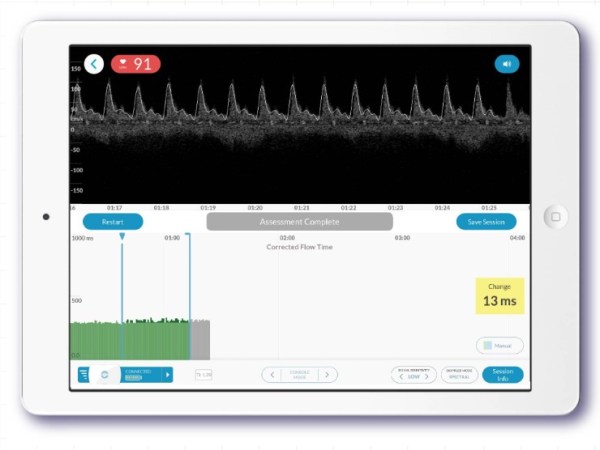
RIVERSIDE, Calif., September 21, 2023 /Business Wire/ — Riverside University Health System is proud to announce the implementation of FloPatch by Flosonics Medical. As a pioneer in adopting new, ground-breaking medical technology, Riverside is making a significant leap forward in healthcare innovation, particularly in the life-saving area of sepsis management. read more. Hi everyone. Here is... Continue Reading →
Changes in venous Doppler morphology with a wireless ultrasound patch
The RUHS code team has collaborated with flosonic with its revolutionary wearable ultrasound patch in gathering pertinent information to assist and aid in fluid management and sepsis resuscitation. Together with our nurse performed POCUS and the flopatch, these tools are life saving and performance changing for the whole critical care team. RUHS code team assesses... Continue Reading →
Catecholamine Vs. Non catecholamine Vasoactive agents
Catecholamine Dopamine exerts its effects on both dopaminergic and adrenergic receptors. The meta-analysis from the Surviving Sepsis Campaign guidelines 2015 did not endorse the use of dopamine due to its association with increased mortality and arrhythmias when compared to norepinephrine. However, it may be considered as an alternative to norepinephrine in patients deemed to have... Continue Reading →
Septic Emboli
Hadoff at 06:00, Septic activation; SIRS X 3, lactate 4.. Fluid resuscitated at hour three, completed 3L LR bolus. Hemodynamics; SV 89, CO 7L/min, SVR 856 after second vasopressor support. Patient is intubated and sedated. Background: Patient was a trauma activation 7 days prior with multiple surgical intervention including spleenectomy persisted to be hypotensive despite... Continue Reading →
Stroke volume; the new vital sign and the effect on micro circulation
Case study: 59 male came in with wound abscess; Pt map is 60 mmHg with 2 positive SIRS criteria; HR 100, Tmax 100.9F. Pt was placed on a non invasive hemodynamic monitoring. CO has been getting worse but SBP is maintaining at 110 mmHg. What's going on with this patient? Flow decrease before pressure decrease... Continue Reading →