Hello everyone. I was rounding during shift last night and came across a patient with a Pulmonary artery catheter and I though a quick review would be helpful since we seldom use it now. Click here for a more in depth review of the Swan Ganz. Insertion site: Central vein, such as the femoral, jugular,... Continue Reading →
A change of ‘shift’ dilemma
Rapid response call: 05:20 am, A rapid response was called towards the end of the shift for a 56-year-old patient in the tele department for an acute desaturation event. He had a significant PMHX of colon cancer, DM 2 and COPD. The primary RN noted that the patient was on room air prior to NGT... Continue Reading →
Be proactive rather than reactive: the hemodynamic optimization algorithm approach to shock
Apart from assessing standard hemodynamic factors, incorporating advanced metrics like the hypotension prediction index, dynamic arterial elastance, and systolic slope can enhance the accuracy of treatment for critically ill patients. Leveraging predictive analytics enables critical care nurses to deliver proactive patient care rather than reactive responses. These variables combined can aid in evaluating a patient's... Continue Reading →
Diamond-Forrester Profile and the VExUS approach to fluid management
Here are quick diagram and review on the 4 quadrant approach to fluid responsiveness and fluid tolerance with the Diamond-Forrester Profile as we learned the basics with flosonic's flopatch and Dr. Haycock's lecture on VExUS. These tools are an incredible window to understanding the dynamic resuscitative process and careful fluid management with our critically ill... Continue Reading →
Antiarrhythmic Agents
A simple and easy way to remember your anti-arrhythmic agents. Mnemonics: Some Block Potassium Channels. Vaughn-Williams Classification | Class I: Sodium Channel Blockers. Class II: Beta-Blockers. Class III: Potassium Channel Blockers. Class IV: Calcium Channel Blockers. Class I Class Ia: Causes moderate degree blockage of fast sodium channels. Drugs include quinidine, procainamide, and disopyramide. Causes... Continue Reading →
Cope’s sign (cardio-biliary reflex)
Rapid response call, 02:30 am. A 45 year old female was admitted for syncopal episode after eating high fatty food who suddenly became bradycardic on her third hospital day. She was diagnosed with acute calculous cholecystitis awaiting laparoscopic cholecystectomy. She became bradycardic in the 40's with a sustained SBP of 77 mmHg. A POCUS was... Continue Reading →
RSI meds in a nutshell; a 5 minute review.
Administration of sedative followed rapidly by a paralytic. RSI was created as a response to the deleterious effects of aspiration. The technique was to decrease the amount of time that a patient’s airway was unprotected during induction. Pretreatment Agents Fentanyl: 2-10 mcg/kg; Reduces sympathetic responses, useful for patients with head injuries or myocardial ischemia. Lidocaine: Can decrease... Continue Reading →
Chiari network
Hi team! Since we perform NP-POCUS in resuscitating septic patient we might have or might encounter this image/assessment in our apical four chamber view of the heart. The Chiari network, encountered infrequently in the right atrium, is a fenestrated, net-like embryonic remnants of valves of sinus venosus, lying closely in relation to the inferior vena... Continue Reading →
PSH management
Paroxysmal Sympathetic Hyperactivity after acquired brain injury; overstimulation secondary to TBI Treatment strategies target the inhibition of central sympathetic output, afferent sensory input, and effector organ responses to sympathetic stimulation. adrenergic agonists | Dexmedetomidine, clonidine; used to control central and peripheral adrenergic activities non selective b-blockers | Propranolol is a lipophilic, central inhibition of catecholamine... Continue Reading →
Changes in venous Doppler morphology with a wireless ultrasound patch
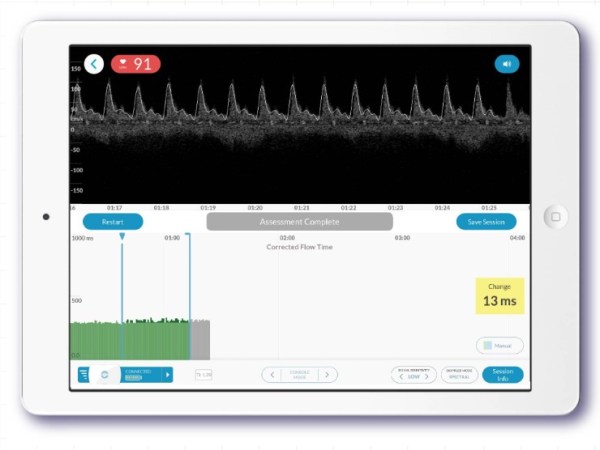
The RUHS code team has collaborated with flosonic with its revolutionary wearable ultrasound patch in gathering pertinent information to assist and aid in fluid management and sepsis resuscitation. Together with our nurse performed POCUS and the flopatch, these tools are life saving and performance changing for the whole critical care team. RUHS code team assesses... Continue Reading →